Blog · 22 November 2026
Dark evenings and icy pavements: lights, visibility and the Highway Code
From November to February, many everyday trips – the school run, a visit to the shops, getting home from work – happen in the dark. Wet leaves, frost and ice add to the challenge. The Highway Code has a section just for powered wheelchair and mobility scooter users, and much of it is about being seen.
This post summarises the Highway Code (rules 36 to 46) and Met Office advice as of 22 November 2026. Our guide to class 2 and class 3 rules covers the legal classes in more detail.
Lights at night
If you use the road, the Highway Code is clear: "At night, lights MUST be used." The same rules on lights, indicators and horns apply as for other road vehicles. Class 3 chairs – the ones allowed on the road – must have front and rear lights and reflectors, as our class rules guide explains.
Even on the pavement, lights and reflectors help others see you as they step out of doorways or drive out of side roads.
Official source: The Highway Code, rules 36 to 46 (opens in a new tab)
Being seen in daylight and at dusk
The Highway Code says that on the road you are slower than other traffic and "may be less visible", and suggests making yourself more visible in the daytime and at dusk – for example with a reflective jacket or reflective strips on the back of your vehicle.
The pedestrian rules give the same advice to people on foot: something light-coloured, bright or fluorescent in poor daylight, and reflective materials in the dark, which drivers can see from up to three times further away. If you go out with a companion who walks alongside, the same applies to them.
Official source: The Highway Code: rules for pedestrians (opens in a new tab)
Road or pavement after dark?
- On pavements, powered wheelchairs and scooters must not go faster than 4 mph (6 km/h), and should give pedestrians priority – remembering that people with a visual or hearing impairment may not know you are there.
- Class 3 vehicles on the road should travel with the traffic, and the Highway Code says that at night you should travel with the traffic too.
- Avoid hazardous junctions and large roundabouts where you can. To turn right, you can wait on the left for a safe gap, or cross as a pedestrian (switching to the lower pavement speed).
- Powered wheelchairs must not be used on motorways. On unrestricted dual carriageways (over 50 mph) you should avoid them, and if you do use one you must have a flashing amber beacon; the Code says to use a beacon on all other dual carriageways too.
Kerbs, leaves and ice
The Highway Code asks you to use dropped kerbs where possible, even if it means going further, to approach any kerb at right angles, and not to try a kerb higher than the manufacturer recommends. In winter, wet leaves and frost on kerb edges make this more important.
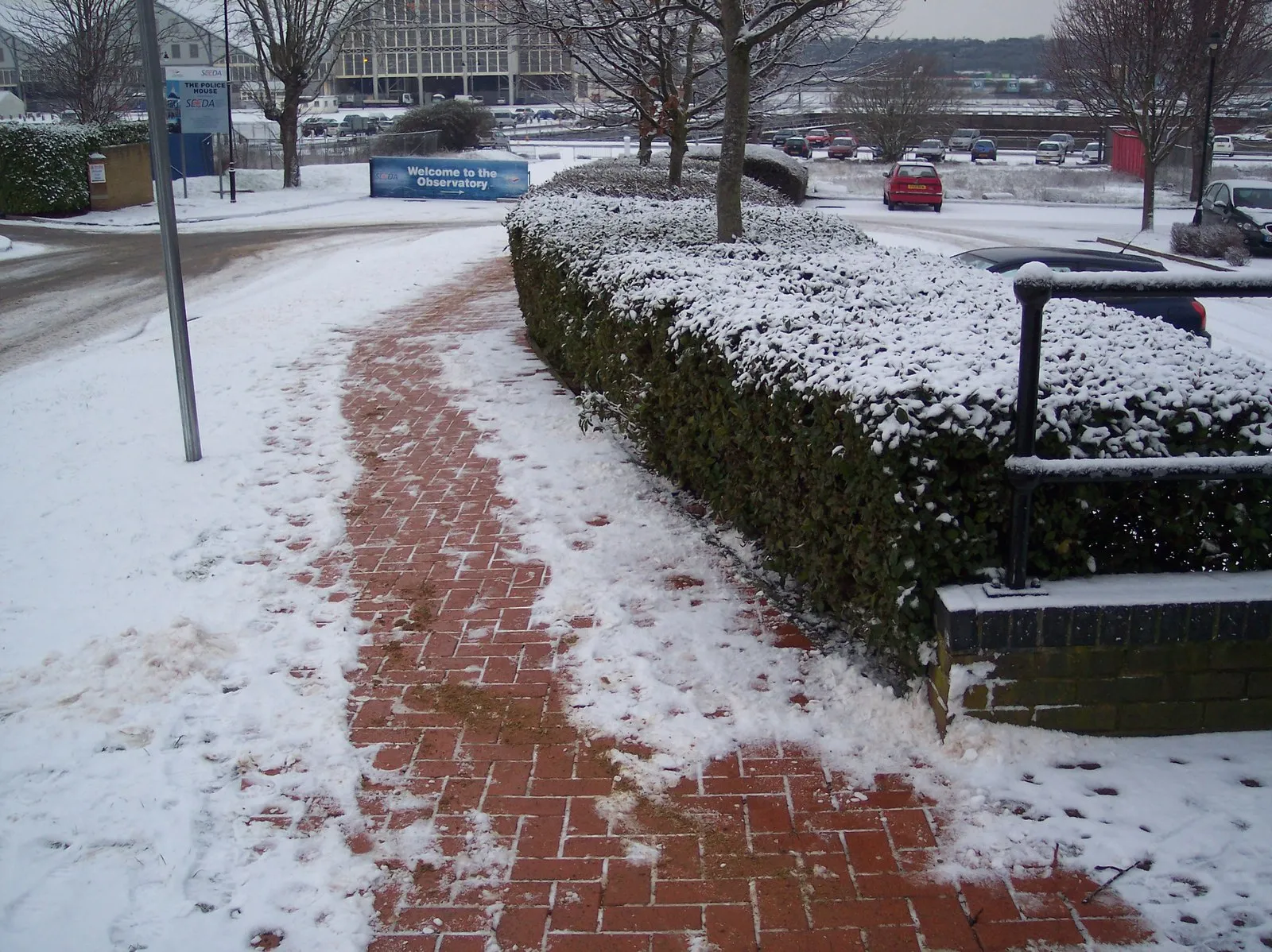
The Met Office's ice advice for people on foot applies to chair users too: plan to leave five minutes earlier so you are not rushing, use main-road pavements, which are likely to be less slippery, and take extra care on untreated pavements. If ice is forecast, it may be a day to stay in or change your plans.
Official source: Met Office: 4 tips for staying safe in ice (opens in a new tab)
Which chairs are built for rougher ground?
XSTO lists these models as suited to rougher terrain. Their pages give the slope and obstacle figures XSTO publishes:
All-terrain crossover powerchair
XSTO M8
New: launched September 2026
XSTO's four-wheel-drive crossover powerchair for town and trail.
- Maximum load
- 150 kg user plus luggage
- Weight
- 68.6 kg without batteries
- Quoted range
- 54 km maximum, with optional battery
- Top speed
- 12 km/h about 7.5 mph
Good for:
- Outdoors
- Rough ground
- At home
All-terrain crossover powerchair
XSTO M8 Pro
New: launched September 2026
The four-wheel-drive M8 with fully powered seating and a one-touch rest position.
- Maximum load
- 150 kg user plus luggage
- Weight
- 72.6 kg without batteries
- Quoted range
- 54 km maximum, with optional battery
- Top speed
- 12 km/h about 7.5 mph
Good for:
- Outdoors
- Rough ground
- At home
Stair-climbing mobility robot
XSTO X12
A stair-climbing, all-terrain mobility robot that keeps its seat level.
- Maximum load
- 136 kg user plus luggage
- Weight
- 115 kg without batteries
- Quoted range
- 35 km on flat ground
- Top speed
- 12 km/h about 7.5 mph
Good for:
- Stairs
- Outdoors
- Rough ground
- At home
Whatever you use, a quick winter check helps: lights working, reflectors clean, tyres in good condition and the battery charged. Our insurance and maintenance guide has more on everyday care.
Sources we checked
Checked 22 November 2026. Links open the original page in a new tab.
Related reading
- Snow, ice and broken pavements: gritting, clearing paths and reporting problemsWinter makes bad pavements worse for powerchair users. What GOV.UK says about clearing snow, council…
- Class 2 and class 3 powered wheelchairs: the UK rulesUK class 2 and class 3 rules for mobility scooters and powered wheelchairs: speed limits, pavements and…
- Insurance, warranty and maintenance for powered wheelchairsDo you need insurance for a powered wheelchair? Plus warranty terms for XSTO chairs, your consumer rights…
- Blue Badges and getting into town over ChristmasWho can get a Blue Badge, what it costs in England, Scotland and Wales, how long applications take – and how…