Guide · Updated November 2026
Adapting your home for a powered wheelchair: grants, storage and charging
A powered wheelchair only helps if you can get it in and out of the house, through the doors and somewhere safe to charge. For many people that means some changes at home, from a ramp at the front door to a wider doorway or a level-access shower.
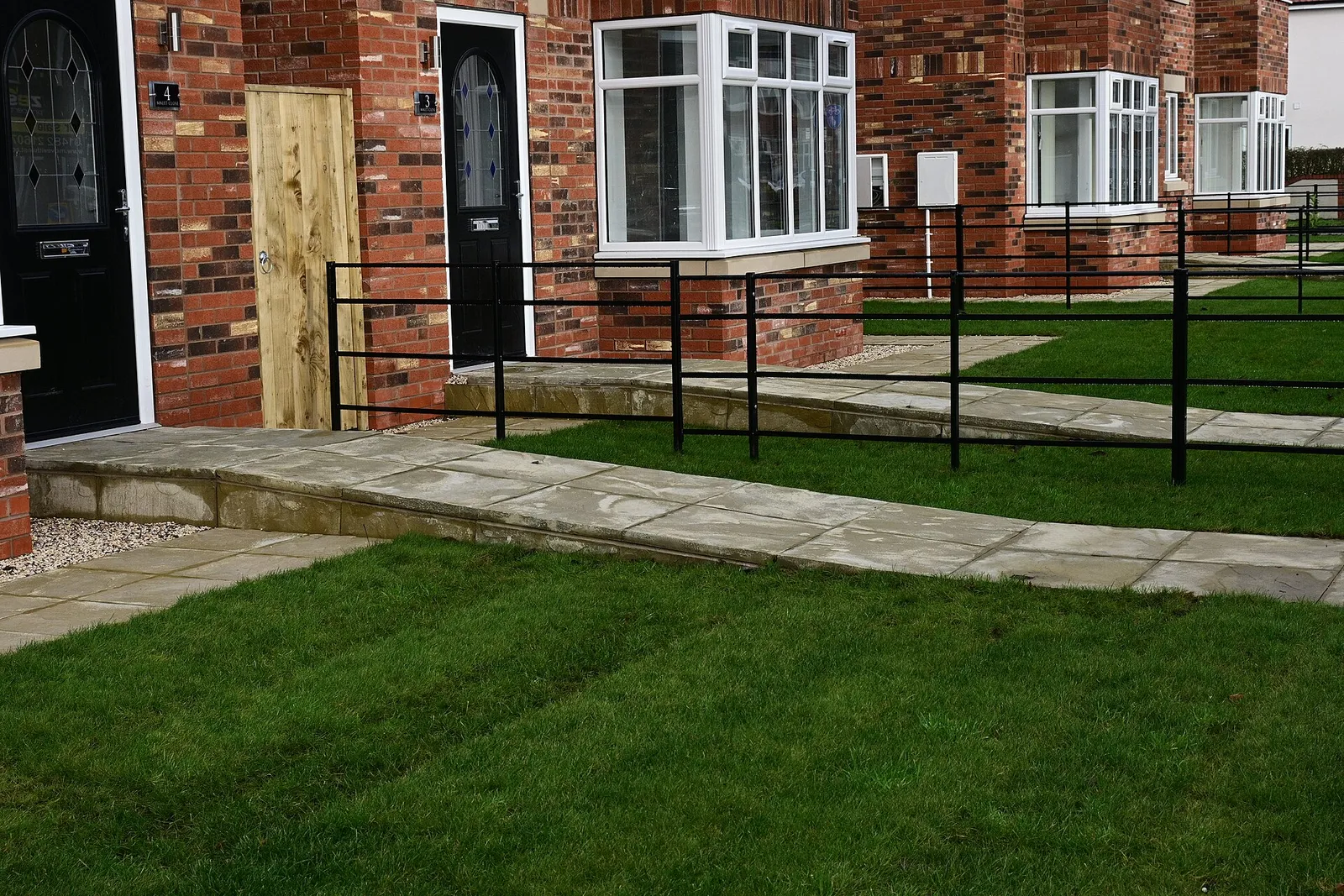
This guide explains the Disabled Facilities Grant your council may give towards that work, and what fire and rescue services advise about storing and charging a chair. It is based on GOV.UK and fire service guidance as of November 2026 and is general information, not advice about your home.
Start with your routes and measurements
Before talking to the council or a builder, measure the chair you have or plan to buy and walk through the routes it will use every day: the way in from the street, the doorways, the turn into each room, and where it will be parked and charged.
Compare doorway widths with the chair's published width, and leave room for your hands and elbows. On XSTO's own figures, the M4 is 580 mm wide unfolded, the M8 series 610 mm and the X12 series 685 mm - see each model's page for the full dimensions.
- The step or slope at the front and back doors
- The narrowest doorway and the tightest turn
- Bathroom and bedroom access
- A dry place to park the chair that does not block a way out
- A socket near that place for the charger
What a Disabled Facilities Grant is
A Disabled Facilities Grant (DFG) is money from your local council towards changes to your home so that a disabled person can live there more easily. GOV.UK says it does not affect any benefits you get.
GOV.UK gives examples of the work it can pay for. Ask your council what it would consider for your home.
If stairs are the problem, our post on wheelchair stair lifts, platform lifts and through-floor lifts compares the options.
- Widening doors and installing ramps
- Adding a stairlift or a level-access shower
- Providing a heating system suitable for your needs
- Adapting heating or lighting controls so they are easier to use
- Improving access to and around the garden
- Building an extension, such as a downstairs bedroom
Official source: GOV.UK: Disabled Facilities Grants (opens in a new tab)
How much you could get
GOV.UK gives these maximum amounts. Some councils may give more, and depending on your income you may have to pay towards the cost.
The grant is means-tested: the amount usually depends on your household income and on household savings over £6,000. For a disabled child under 18, the grant can be given without the parents' income being taken into account. Landlords applying for a tenant are not means-tested.
- England: up to £30,000
- Wales: up to £36,000
- Northern Ireland: up to £25,000
- Scotland: Disabled Facilities Grants are not available; GOV.UK says support for equipment and adaptations comes through a different scheme, so contact your local council
Official source: GOV.UK: what you could get (opens in a new tab)
Who can apply
You, or someone living in the property, must be disabled. You can apply as the owner, as a tenant or as a landlord with a disabled tenant. You must intend to live in the property during the grant period, which GOV.UK says is usually five years, or less in some cases such as terminal illness.
The council must be satisfied that the work is necessary and appropriate for the disabled person's needs, and that it is reasonable and can be done given the age and condition of the property. It may send an occupational therapist or a trained assessor to look at what you need.
Official source: GOV.UK: eligibility (opens in a new tab)
Applying, and what to expect
You apply through your local council. GOV.UK says Foundations, a government-funded organisation, can help with the application. Planning permission and building regulations approval are separate, and you must apply for them yourself if the work needs them. The council may ask for an architect or surveyor to plan and oversee the work, and the grant can go towards their fees.
Do not start the work before the council approves your application - GOV.UK warns you may not get a grant if you do. The council must give you a decision within six months of applying, and the work should normally be finished within 12 months of approval. Payment may be in instalments or in full at the end, either to you or straight to the contractor.
If you are unhappy with the council's decision you can appeal to the council, and if you are still unhappy after that, complain to the Local Government Ombudsman. If your needs change later, you can apply for another grant for the same property.
Official source: GOV.UK: how to claim (opens in a new tab)
Storing and charging the chair safely
Devon and Somerset Fire and Rescue Service advises charging a mobility scooter or wheelchair in a designated, well-ventilated place, and only during the day, so that someone is awake to raise the alarm if a faulty battery causes a fire. Keep the chair away from your escape route, so it cannot block the way out or cut it off if it does catch fire.
Its guidance for building owners adds: use the charging equipment made for that vehicle, follow the manufacturer's instructions, and charge away from anything that could ignite. If you live in a block of flats, speak to your landlord or managing agent first - the guidance says some buildings may not be able to allow scooters to be stored or charged because of their size and layout.
Keep exits clear with your mobility aids in mind, and think about another way out if a fire cut the power to a stairlift or lift. Our insurance and maintenance guide has more on everyday battery care.
- Charge with the charger supplied, as the manual describes
- Charge during the day, not overnight
- Charge in a well-ventilated spot, away from things that could catch fire
- Park the chair where it does not block a door, hallway or stairs
Official sources: Fire safety for people using mobility aids (opens in a new tab)Battery-powered scooters and wheelchairs: storage and charging (opens in a new tab)
Questions
Can a Disabled Facilities Grant pay for the wheelchair itself?
GOV.UK describes the grant as help towards changes to your home, such as ramps, wider doors and accessible bathrooms. For the chair itself, see our NHS wheelchair services and funding guide.
Can I apply if I rent my home?
Yes. GOV.UK says you can apply as a tenant, and a landlord can also apply on behalf of a disabled tenant.
Will a grant affect my benefits?
GOV.UK says a Disabled Facilities Grant does not affect any benefits you get.
Can I have the work done first and claim afterwards?
No. GOV.UK says you may not get a grant if you start the work before the council approves your application.
Is it safe to charge a powered wheelchair overnight?
Devon and Somerset Fire and Rescue Service advises charging during the day, so someone is awake to raise the alarm if a battery fault starts a fire. Follow the charging instructions in your chair's manual.
Sources we checked
Information checked November 2026. Links open the original page in a new tab.
Related reading
- Battery and charger safety this winter: new chargers, damaged batteries and disposalWinter means more charging indoors, and Christmas can bring new chargers and spare batteries. What fire…
- Wheelchair stair lifts: platform lifts, through-floor lifts and stair climbersLooking for a wheelchair stairlift? How platform stairlifts, through-floor lifts and stair-climbing…
- Powered wheelchairs and work: Access to Work and reasonable adjustmentsHow Access to Work grants can help with equipment, workplace changes and travel to work, what your employer…
- Help with heating costs this winter: Cold Weather Payments and the Warm Home DiscountKeeping warm and keeping a powerchair charged both cost money. What GOV.UK says about Cold Weather Payments…
- Cars, vans and WAVs for powerchair users: vehicle tax exemption and choosing a vehicleSome XSTO chairs fold into a boot; others need a ramp. What GOV.UK says about vehicle tax exemption and the…