Blog · 23 November 2026
Cars, vans and WAVs for powerchair users: vehicle tax exemption and choosing a vehicle
If the new year brings a change of car, it is worth thinking about your powered wheelchair at the same time. Lighter folding chairs can go in a boot; heavy all-terrain chairs need a vehicle with a ramp or lift. There may also be help with vehicle tax.
This post sums up GOV.UK, Motability and Driving Mobility pages as checked on 23 November 2026. It is general information, not advice.
Vehicle tax exemption
GOV.UK says one vehicle can be exempt from vehicle tax if it is registered to the disabled person or their nominated driver and used for the disabled person's personal needs. You can qualify if you get:
- the higher rate mobility component of Disability Living Allowance (DLA)
- the enhanced rate mobility component of PIP or Adult Disability Payment
- the higher rate mobility component of Child Disability Payment, or Scottish Adult Disability Living Allowance
- War Pensioners' Mobility Supplement or Armed Forces Independence Payment
Official source: GOV.UK: financial help for disabled people – vehicles and transport (opens in a new tab)
The 50% reduction
If you get the standard rate mobility component of PIP or Adult Disability Payment, GOV.UK says one vehicle can get a 50% reduction in vehicle tax. The lower rate mobility component of DLA doesn't qualify. You apply to DVLA by post with proof of your award, the vehicle's V5C logbook, a V10 form and payment of half the full rate. GOV.UK says not to send your PIP assessment or other medical information.
What about the chair itself?
GOV.UK says powered wheelchairs and mobility vehicles are exempt from vehicle tax if they have a maximum speed of 8mph and a device limiting them to 4mph on footways. Our guide to class 2 and class 3 rules explains registration.
Official source: GOV.UK: vehicles exempt from vehicle tax (opens in a new tab)
Boot, hoist or WAV?
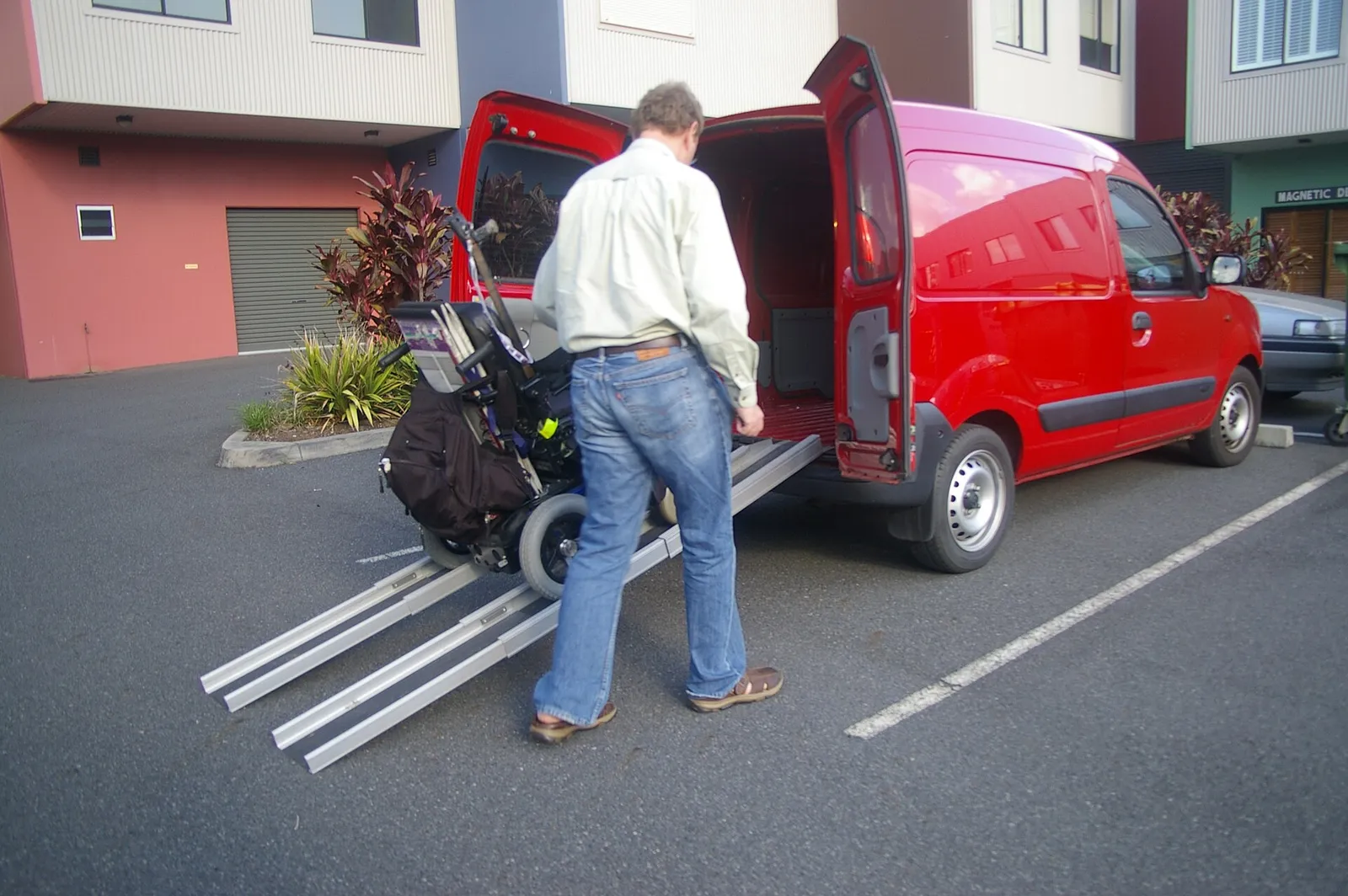
How you carry your chair depends on its weight and whether it folds. On this site, the EZGO2 is the lightest model, the M4 series splits into sections for a boot, and the X12 series is too heavy to lift and needs a vehicle with a ramp. See travelling with a power wheelchair for more.
Lightweight folding powerchair
XSTO EzGo2
An ultra-light carbon-fibre power wheelchair for indoor use and easy lifting.
- Maximum load
- 136 kg user plus luggage
- Weight
- 11.5 kg without its 2.2 kg battery
- Quoted range
- 15 km
- Top speed
- 4.5 km/h about 2.8 mph
Good for:
- At home
- Travel
- Tight spaces
No UK seller listing found (September 2026)
Self-balancing powerchair
XSTO M4
A compact, self-levelling powerchair that folds down for the car boot.
- Maximum load
- 115 kg user plus luggage
- Weight
- 51.5 kg without battery
- Quoted range
- 15 km
- Top speed
- 6 km/h about 3.7 mph
Good for:
- At home
- Travel
- Tight spaces
- Outdoors
Stair-climbing mobility robot
XSTO X12
A stair-climbing, all-terrain mobility robot that keeps its seat level.
- Maximum load
- 136 kg user plus luggage
- Weight
- 115 kg without batteries
- Quoted range
- 35 km on flat ground
- Top speed
- 12 km/h about 7.5 mph
Good for:
- Stairs
- Outdoors
- Rough ground
- At home
A wheelchair accessible vehicle (WAV) lets you travel while staying seated in your wheelchair. Motability, which runs the car scheme for people getting a qualifying mobility allowance, groups WAVs by size, from small to large. Its site says it is important to talk to a WAV supplier, who can arrange a demonstration to check a vehicle suits you.
Official sources: Motability: wheelchair accessible vehicles (opens in a new tab)Motability: how the Scheme works (opens in a new tab)
Get an independent assessment
Driving Mobility is a charity with a network of independent assessment centres around the UK. Its services include passenger assessments, advice on WAVs and vehicle adaptations, and advice on loading mobility equipment into a vehicle. Its website also mentions a Driving Assessment Grant that can help with the cost of assessments and adaptations.
If you don't drive, GOV.UK says the Blue Badge scheme covers passengers as well as drivers with severe walking difficulties, and your local council may run dial-a-ride or taxi schemes. Our post on Blue Badges has the details.
Official source: Driving Mobility (opens in a new tab)
Questions to ask before you choose
VAT may not be charged on adapting a vehicle for your condition – see our VAT relief guide.
- What is my chair's weight, length, width and height with me seated in it?
- Is the ramp or lift rated for the combined weight of me and my chair?
- Is there enough headroom when I go up the ramp, not just once I'm inside?
- How will the chair be secured, and who will do it?
- Can I try the vehicle with my own chair before committing?
Sources we checked
Checked 23 November 2026. Links open the original page in a new tab.
Related reading
- Travelling with a power wheelchair: flights, lithium batteries, trains and carsHow to fly with a powered wheelchair and lithium batteries, the CAA's watt-hour limits, booking assistance…
- Blue Badges and getting into town over ChristmasWho can get a Blue Badge, what it costs in England, Scotland and Wales, how long applications take – and how…
- Class 2 and class 3 powered wheelchairs: the UK rulesUK class 2 and class 3 rules for mobility scooters and powered wheelchairs: speed limits, pavements and…
- How to choose a power wheelchairA practical, plain-English guide to choosing a powered wheelchair in the UK: assessments, where you will use…