Blog · 23 November 2026
Changing Places toilets: what they are and how to find one on a day out
Christmas shopping, a winter walk at a country park, a match or a show: for many people who use powered wheelchairs, whether a day out is possible depends on one thing – a toilet they can actually use. A standard accessible toilet doesn't have the space or equipment some people need. A Changing Places toilet does.
This post uses the Changing Places campaign's website and GOV.UK, as checked on 23 November 2026.
What a Changing Places toilet has
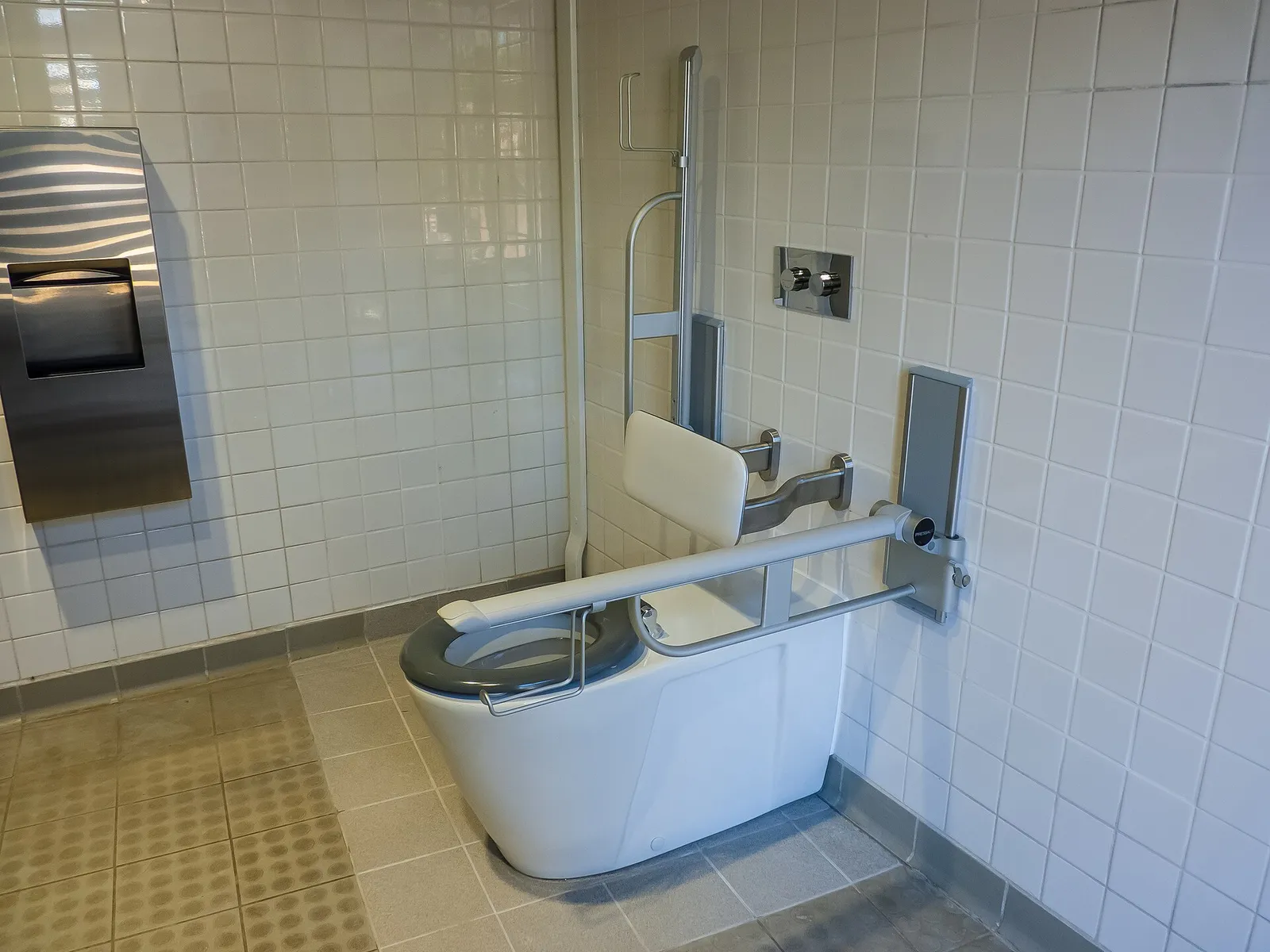
The Changing Places website describes a larger accessible toilet with equipment most accessible toilets don't have:
- a room of at least 12 square metres, with space for the user, a wheelchair and up to two carers
- a ceiling track hoist, so carers don't have to lift the person
- a height-adjustable adult changing bench
- a centrally placed toilet with grab rails and drop-down support rails
- often a height-adjustable washbasin, and sometimes a shower
Who needs them
The Changing Places website says over a quarter of a million people in the UK need these toilets to get out and about – for example people who need a hoist to get onto the toilet or need help with continence care. The government gave a similar figure, more than 250,000 people, when it announced the building rules below.
Its FAQ says they are for anyone whose needs aren't met by a standard accessible toilet – including people with spinal injuries, muscular dystrophy or multiple sclerosis, and people with less visible conditions – and for the carers, personal assistants and family members who help them.
Where they are required (England)
In July 2020 the government announced that Changing Places toilets would become compulsory in new public buildings in England, and in buildings undergoing major refurbishment, from 2021. Its announcement listed:
- venues for 350 or more people, such as cinemas, theatres, museums, libraries and universities
- shopping centres and retail parks of 30,000 square metres or more, and single shops of 2,500 square metres or more
- sport and leisure buildings over 5,000 square metres
- stadiums, theme parks, zoos and exhibition centres for more than 2,000 people
Finding one
The Changing Places website has an official map of registered toilets – it listed 2,741 when we checked – and a route-planning tool for longer journeys. Search by town or postcode before you go, then:
Some Changing Places toilets are locked with a RADAR key. The Changing Places FAQ says you can usually get one through your local council's access officer. If you find a toilet out of order, the FAQ asks you to tell Changing Places, which flags it on the map and works with the venue; you can also leave feedback from the toilet's map entry.
- check the opening hours, which often follow the venue's own
- ring ahead to check the hoist and bench are working and the room isn't being used as a store
- ask whether you need a key or need to ask staff to open it
- note a back-up option nearby in case it's out of action
- ask whether you need to bring your own hoist sling, as the Changing Places site doesn't say
Official source: Changing Places: find a toilet (opens in a new tab)
Plan the rest of the trip
Changing Places toilets are large enough for a wheelchair and carers, but check the door width and turning space against your chair's figures if it is a large model. Our compare tool lists XSTO dimensions. For getting there, see Blue Badges and getting into town and our buses, coaches and taxis guide. If you're going to a cinema or show, our post on the CEA Card and the Access Card covers booking.
If your local venue doesn't have one
Tell the venue, politely and in writing, that you would visit if it had one, and copy in your council if it's a council building. It helps venues know there is demand.
Sources we checked
Checked 23 November 2026. Links open the original page in a new tab.
Related reading
- Cinema, panto and concerts this Christmas: the CEA Card, the Access Card and wheelchair spacesGoing out to a film, a pantomime or a gig in a powerchair? How the CEA Card and the Access Card work, what…
- Blue Badges and getting into town over ChristmasWho can get a Blue Badge, what it costs in England, Scotland and Wales, how long applications take – and how…
- Buses, coaches and taxis with a powered wheelchair: your rightsWhat the law says about wheelchair spaces on buses and coaches, the standard wheelchair size, when a driver…
- Cars, vans and WAVs for powerchair users: vehicle tax exemption and choosing a vehicleSome XSTO chairs fold into a boot; others need a ramp. What GOV.UK says about vehicle tax exemption and the…